
The common mistake is treating bourbon and rye as interchangeable: same pour, same sweetener, same ratio, then blaming the bottle when the drink lands flabby or harsh. They are different grains doing different jobs. One is round and sweet, the other is dry and peppery, and the sugar has to move when you switch. Holding the sweetener steady with a consistent Traditional Old Fashioned Syrup is the only honest way to taste that difference.
Below: what separates them at the mash bill, which classics each one belongs in, and how the build changes when you swap.
Mash bill: where the difference starts
American whiskey law sets the floor. Bourbon has to be at least 51 percent corn. Rye has to be at least 51 percent rye grain. The rest of the recipe is the distiller's call, and that is where house character lives.
Corn is the sweetest grain on the shelf, so bourbon gets its round body, its caramel and vanilla, its soft landing. If you are still choosing a bottle, our notes on the best bourbon for an old fashioned narrow it down fast. Rye runs the other direction: dry, grassy, faintly minty, with a black pepper snap on the finish. That snap is what a Sazerac is built around, and it is why the drink falls apart with bourbon in it.
Bourbon vs rye: side by side
| Bourbon | Rye | |
|---|---|---|
| Legal minimum | 51% corn | 51% rye grain |
| Core flavor | Caramel, vanilla, baked apple, toasted oak | Black pepper, dill, dry grass, faint mint |
| Body | Rounder, softer, sweeter through the middle | Leaner, drier, sharper finish |
| Sweetener needed | Less: about 1/4 oz syrup per 2 oz pour | More: about 1/3 to 1/2 oz syrup per 2 oz pour |
| Classics it owns | Old fashioned, whiskey sour, boulevardier, mint julep | Sazerac, Manhattan, Vieux Carre, Brooklyn |
| Pairs with | Orange, stone fruit, maple, toasted nut | Absinthe, sweet vermouth, bitters, lemon peel |
What makes a great bourbon or rye cocktail
There are three components in a spirit-forward drink: the whiskey, the bitters, and the sweetener. Most people obsess over the first, tinker with the second, and treat the third as an afterthought. That is backwards. The whiskey sets the character, but the sweetener decides whether that character reads as warm or simply hot.
The sweetener is also the only slot you fully control. You cannot make a 100 proof rye softer by wishing at it. You can give it a syrup with enough body to cushion the edge without burying the pepper. Match the sugar to the grain and the drink mostly builds itself.
The same old fashioned, built both ways
Make both. Ten minutes, one lesson, no argument afterward.
Ingredients, bourbon build
- 2 oz bourbon, 90 to 100 proof
- 1/4 oz Traditional Old Fashioned Syrup
- 2 dashes aromatic bitters
- Orange peel
- One large ice cube
Ingredients, rye build
- 2 oz rye, 95 to 100 proof
- 1/3 oz Traditional Old Fashioned Syrup
- 2 dashes aromatic bitters
- Lemon peel
- One large ice cube
Instructions
- Add the syrup and bitters to a mixing glass, then the whiskey. Two glasses, two builds, side by side.
- Fill each with ice and stir 25 to 30 seconds, until the outside of the glass frosts over.
- Strain each over one large cube in a rocks glass.
- Express the peel over the surface, orange for the bourbon and lemon for the rye, then drop it in.
- Taste them back to back. The rye should read dry and spiced with a long finish; the bourbon rounder, warmer, shorter.
Why the sweetener matters
Proof Syrup is made in small batches with raw cane sugar rather than refined white sugar or corn syrup, and that shows up in two places you can taste. Raw cane carries a trace of molasses that reads as faint toffee. It sits under bourbon's caramel without adding anything foreign, and it gives rye's pepper something to push against.
The second thing is body. A real syrup has viscosity, so it coats the tongue a half second longer than a muddled sugar cube ever will. That half second is what people mean when they say a drink has weight. There is a practical argument too: a muddled cube is a different drink every night, because half of it stays at the bottom of the glass. A measured pour is the same drink every time, and when you are comparing two whiskeys, that consistency is the experiment.
Variations worth building
Traditional
Ingredients: 2 oz whiskey, 1/4 oz (bourbon) or 1/3 oz (rye) Traditional Old Fashioned Syrup, 2 dashes aromatic bitters, citrus peel.
Best for: the control experiment, and the one build that works with either grain.
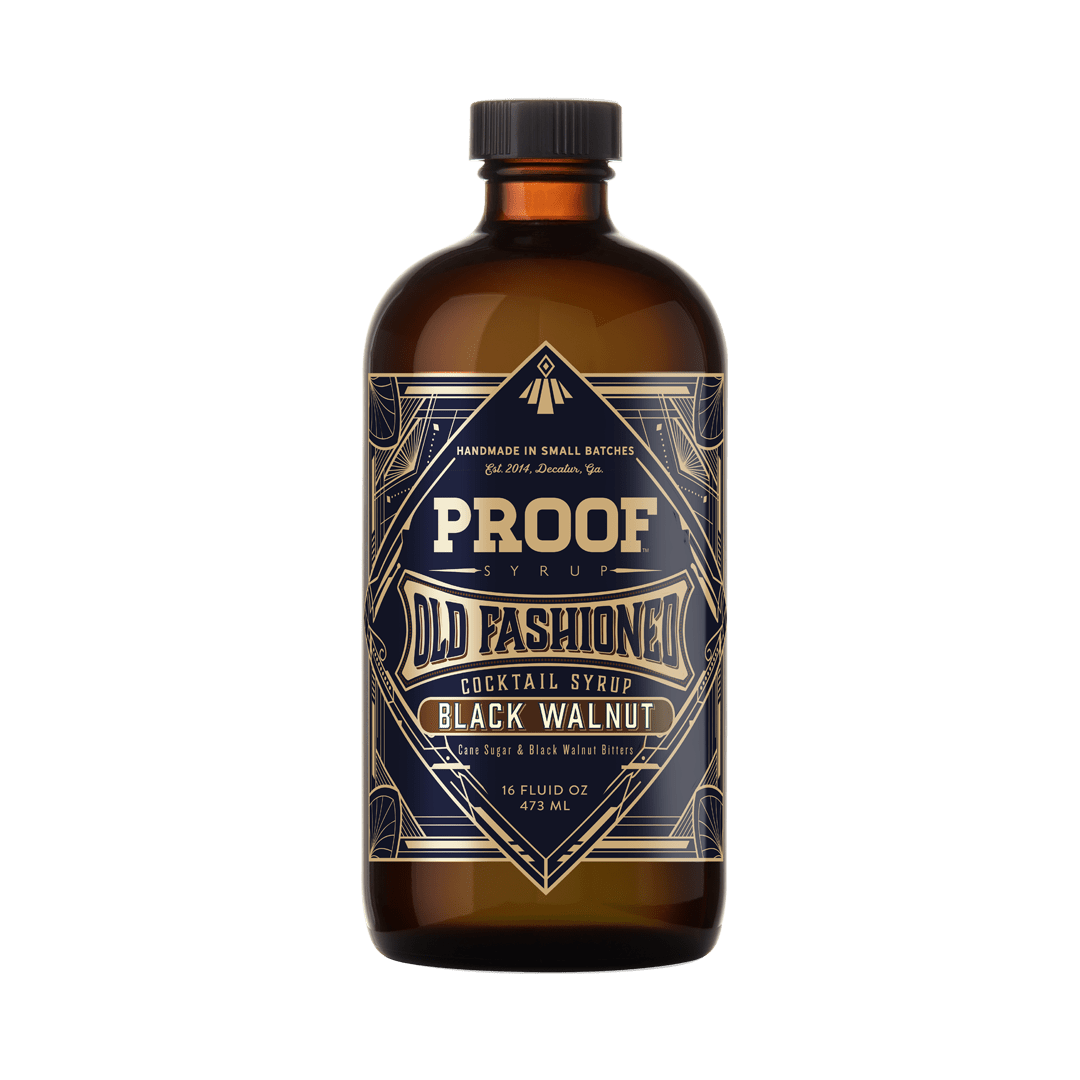
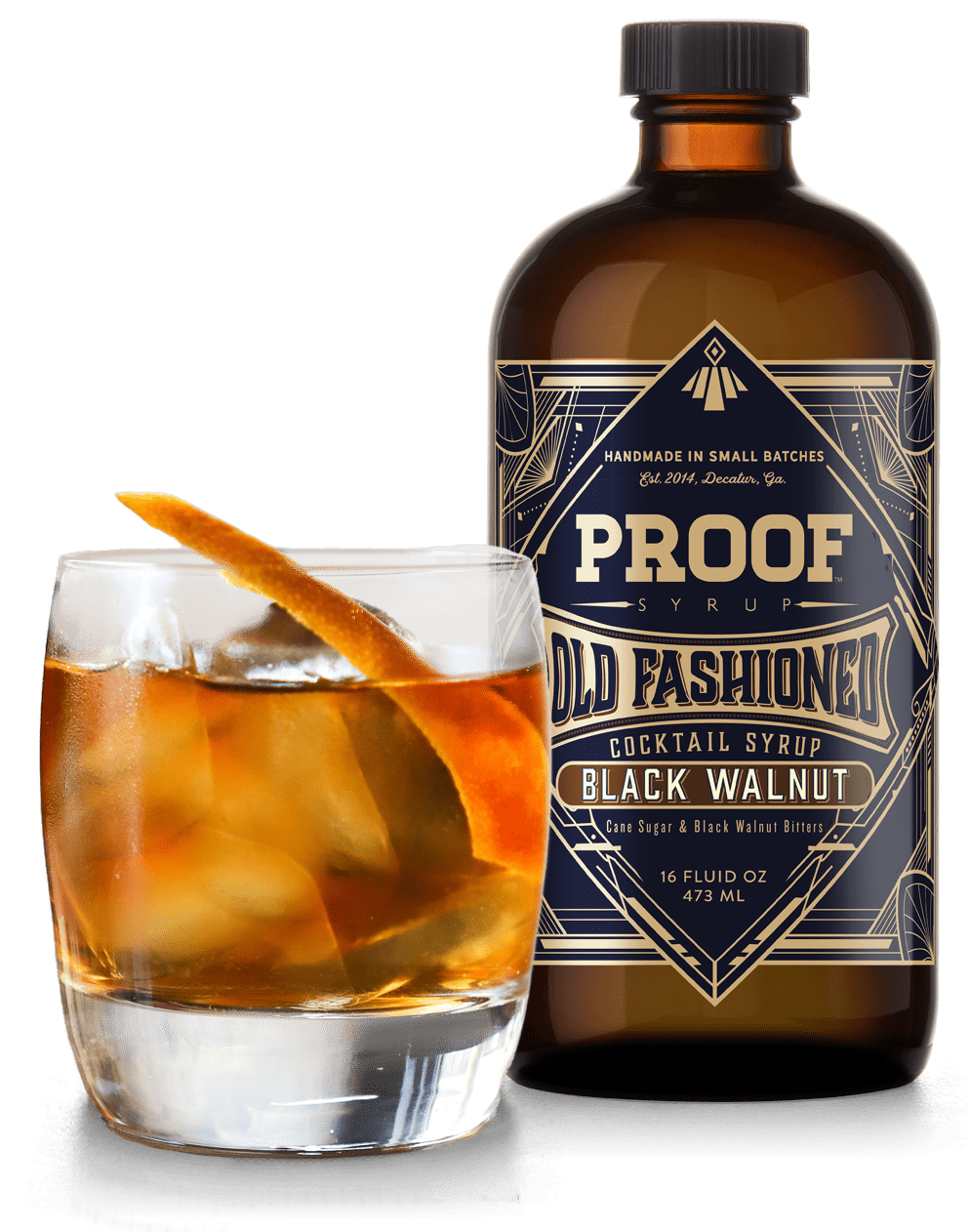
Black Walnut
Ingredients: 2 oz rye, 1/3 oz Black Walnut Syrup, 2 dashes aromatic bitters, lemon peel.
Best for: rye, decisively. Toasted nut fills the gap where corn sweetness would have been, so the drink gains depth without losing its dry spine.
Maple Bacon
Ingredients: 2 oz bourbon, 1/4 oz Maple Bacon Syrup, 2 dashes aromatic bitters, orange peel.
Best for: bourbon in cold weather. Maple and corn are natural allies, and the savory edge keeps it from reading as dessert.
Orange
Ingredients: 2 oz high-rye bourbon, 1/4 oz Orange Syrup, 2 dashes aromatic bitters, orange peel.
Best for: splitting the difference. Citrus brightens bourbon and tames rye, which makes it the safest bottle to hand a guest.
Technique that actually changes the drink
Stir, do not shake
Spirit-forward drinks with no citrus juice get stirred. Shaking aerates and over-dilutes, which flattens rye's spice and makes bourbon taste watery. Thirty seconds of stirring gets the chill and the dilution you want.
Set the sugar by proof, not by habit
A 90 proof bourbon and a 100 proof rye are not the same drink at the same ratio. Move up a barspoon for every notch of proof and every notch of rye in the mash bill.
Use one large cube
Small cubes have more surface area, so they melt faster and the last third of your drink is water. One large cube keeps the ratio honest to the final sip.
Express the peel, then drop it
Squeeze it skin-side down over the surface so the oils land on the drink. Orange oil rounds bourbon. Lemon oil sharpens rye. Two seconds, and it is the difference between a good drink and a finished one.
Pick a lane, or keep both
The honest answer to bourbon vs rye is that you want one of each, and one syrup that makes both taste like themselves. Start with the whiskey you already own, hold the sweetener constant, and let the grain do the talking. When you are ready to push further, the old fashioned syrup collection has the flavors that play best with each side.