
Most people buy the wrong bourbon for an Old Fashioned by spending too much on it. The bottle you sip neat and the bottle you build a cocktail with are not the same purchase, and a drink with sugar, bitters, and dilution in it will flatten the nuance you paid an extra forty dollars for. What actually matters is proof, mash bill, and how the whiskey behaves once a sweetener like Traditional Proof Syrup is in the glass with it. Here is how to shop.
What makes a great Old Fashioned bourbon
An Old Fashioned is three ingredients and water. There is nowhere to hide, which is why people assume the whiskey is the entire decision. It is not. In a spirit-forward drink the sweetener is a third of the cocktail, and it carries the body, the texture, and the length of the finish. Standard 1:1 simple syrup is mostly water, so the drink thins out right at the end, and drinkers blame the bourbon for a problem the sugar caused.
So the real question is not which bourbon is best. It is which bourbon still tastes like itself after a third of the glass is sweetener, a couple of dashes of bitters, and about half an ounce of meltwater. That answer comes down to three numbers on the label.
Price tiers: what each one actually buys you
Under $25: the workhorse shelf
Evan Williams Black, Old Forester 86, Benchmark, Wild Turkey 81. These are young, corn-forward, and built for mixing. The trap at this tier is proof. A lot of sub-$20 bottles sit at 80 proof, and 80 proof bourbon does not survive ice and sugar. It goes watery and vaguely sweet. If you shop here, take the highest proof on the shelf and skip anything with a flavoring on the label.
$25 to $45: where the money makes sense
Wild Turkey 101, Old Forester 100, Four Roses Small Batch, Elijah Craig Small Batch, Knob Creek 9 Year. This is the tier where proof, age, and price finally line up, and it is where the great majority of Old Fashioneds should be built. You get enough barrel character to read through the sugar and enough alcohol to hold shape against dilution. If you buy one bottle for cocktails, buy it here.
$60 and up: diminishing returns in a mixed drink
Single barrels, older stated ages, allocated bottles. These are genuinely better whiskeys and largely wasted in an Old Fashioned. The delicate secondary notes people chase at this tier, the ones that show up neat at room temperature, are the first things sugar and cold erase. Drink those neat. Build cocktails with the tier below.
Mash bills: corn, rye, or wheat
High-rye bourbon, roughly 20 to 35 percent rye
Four Roses, Old Grand-Dad, Bulleit. Pepper, baking spice, and a dry finish. High-rye is the most forgiving choice because the spice pushes back against the sweetener, which means you have more room before the drink tips sweet. If you like a drier Old Fashioned, start here and stay at a lower syrup ratio.
Wheated bourbon
Maker's Mark, Larceny, Weller Special Reserve. Wheat replaces rye in the small grain slot, and the result is softer and rounder with less spice. Wheated bourbon makes a plush, easy Old Fashioned that can go flabby if you are heavy handed with sugar. Cut the syrup back by a quarter and add a third dash of bitters to give it a spine.
Traditional low-rye bourbon
Buffalo Trace, Elijah Craig, Evan Williams. Corn-forward, caramel and vanilla, moderate spice. This is the default and the safest bet if you are buying for other people. It takes any of the flavored syrups well because it does not bring a strong opinion of its own.
Proof: the most useful number on the label
Ignore age statements before you ignore proof. Between the ice and the syrup, an Old Fashioned picks up somewhere around a half ounce of water, and 80 proof bourbon simply does not have the alcohol left to carry flavor through that. The workable range is 90 to 107. Bottled in bond is a useful shortcut, since it guarantees 100 proof, four years minimum, and one distillery in one season.
Barrel proof bottles, anywhere from 115 to 130, make an excellent Old Fashioned if you adjust. Use a slightly larger cube, stir a few seconds longer, and keep the syrup where it is. The higher alcohol carries more sweetness than you expect, so adding more sugar to compensate is usually a mistake.
The build
Ingredients
- 2 oz bourbon, 90 to 107 proof
- 1/4 to 1/2 oz Traditional Proof Syrup, depending on how dry you like it
- 2 dashes aromatic bitters
- Orange peel
Instructions
- Add bourbon, syrup, and bitters to a mixing glass with plenty of ice.
- Stir for twenty to thirty seconds, until the glass frosts and the outside is uncomfortable to hold.
- Strain over one large cube in a rocks glass.
- Express the orange peel over the surface, oil side down, then drop it in.
Why the sweetener matters
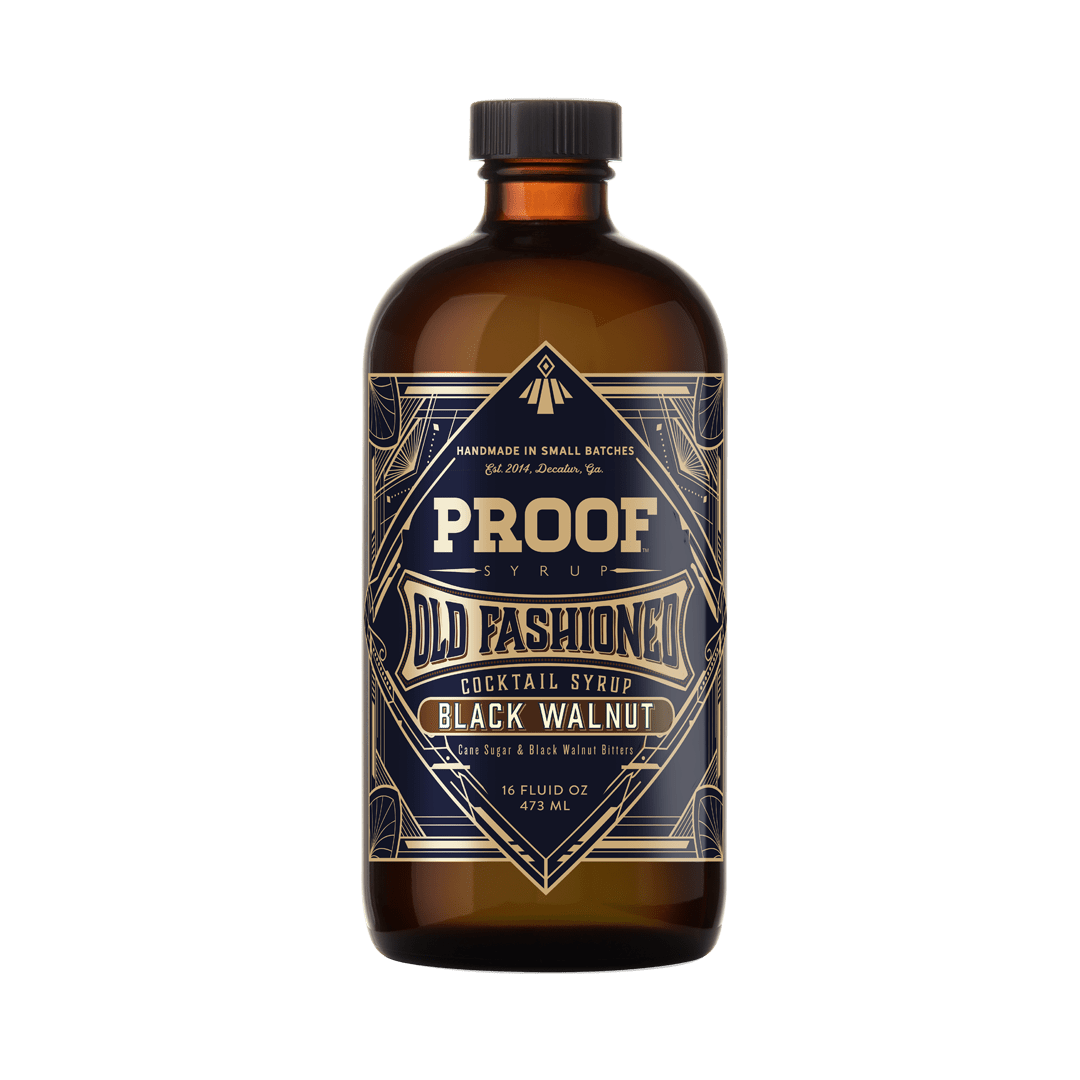
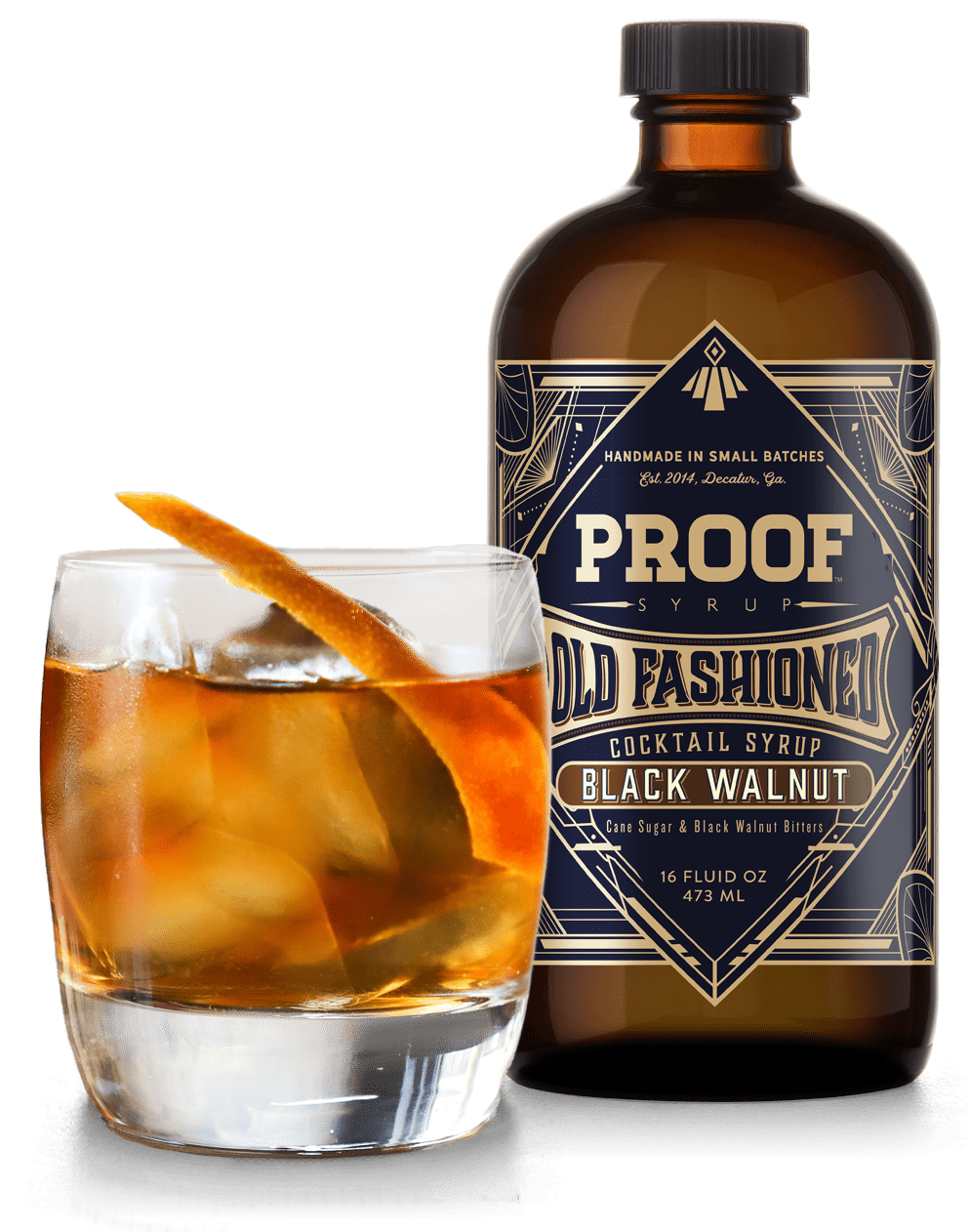
Proof Syrup is made in small batches from raw cane sugar, which brings a faint molasses depth that muddled white sugar cubes and 1:1 simple never deliver. It is denser than simple syrup, so it adds weight and a longer finish rather than just sweetness. That is the part people notice without being able to name it.
It also removes a variable. Homemade syrup drifts batch to batch and thins as it sits, so the ratio you liked last month is not the ratio you are pouring today. If you are comparing bourbons, you need everything else in the glass to hold still. Bottles come in 8 oz, and there is a 12-bottle case if you entertain.
Pairing the bottle to the syrup
Wheated bourbon with Traditional
Ingredients
- 2 oz wheated bourbon
- 1/3 oz Traditional Proof Syrup
- 2 dashes aromatic bitters
- Orange peel
Best for: drinkers who want soft and round rather than sharp.
High-rye bourbon with Black Walnut
Ingredients
- 2 oz high-rye bourbon
- 1/3 oz Black Walnut Proof Syrup
- 2 dashes aromatic bitters
- Lemon peel
Best for: the driest, most bitter-leaning Old Fashioned on this list.
Barrel proof bourbon with Maple Bacon
Ingredients
- 2 oz barrel proof bourbon
- 1/4 oz Maple Bacon Proof Syrup
- 2 dashes aromatic bitters
- Orange peel
Best for: a savory, smoky winter drink that stands up to high alcohol.
Three things that matter more than the bottle
Stir long enough to be uncomfortable
Twenty seconds is a starting point, not a finish line. Higher proof bourbon needs more time and more water. Stop when the mixing glass is genuinely painful to hold with bare fingers, and taste before you strain.
Measure the syrup instead of pouring by feel
A free pour of syrup lands anywhere between a quarter ounce and a full ounce, which is the difference between a stiff drink and a dessert. Use a jigger every time. This is the single fastest way to make your Old Fashioneds repeatable.
Express the peel, then decide whether to drop it
Most of the aroma comes from the oil sprayed across the surface, not the peel sitting in the drink. Squeeze it skin side down over the glass first. Leaving it in adds a slow bitterness over ten minutes that suits high-proof bourbon and overwhelms a wheated one.
Buy for the drink you are making
The short version: 90 to 107 proof, $25 to $45, and pick a mash bill that matches how dry you want the drink. Then spend the attention you saved on the sweetener, since that is the third of the glass most people never think about. Browse the full lineup at the Proof Syrup collection or start with the Old Fashioned syrups.
Ice, and why it is the fourth ingredient
Large, dense ice melts slowly, which means less dilution over time and a drink that stays cold and composed from the first sip to the last. A single large cube or a hand-carved sphere is ideal. Avoid crushed or cracked ice in a stirred Old Fashioned entirely; it dilutes far too fast and waters the drink down before you are halfway through it. If you are drinking a barrel proof bottle, size up the cube rather than adding more stir time on its own.
Common mistakes worth avoiding
Do not shake it
The Old Fashioned is a stirred drink. Shaking aerates the cocktail, clouds it, and dilutes it unevenly. Stir slowly and consistently, keeping the spoon pressed to the inside wall of the glass.
Skip the muddled cherry and orange slice
An expressed orange peel is the correct garnish. Muddling fruit into the base of the glass turns the Old Fashioned into something else — a practice that became common during Prohibition, when bartenders masked rough spirits behind fruit and sugar. There is no rough spirit to hide here. Express the peel, run it around the rim, drop it in, and stop.
Quality over age
A 12-year bourbon will not automatically make a better Old Fashioned than a good 4-year expression. Age matters, but flavor profile matters more. Choose a bourbon whose character you actually want to taste through the bitters and syrup.
Build in the glass when you are making one
For a single rocks-served drink there is no need for a separate mixing glass. Add the syrup and bitters directly to the serving glass, place the ice, pour the bourbon, and stir. Fewer vessels, less cleanup, and the method encourages you to watch the drink come together. Save the mixing glass for when you are making two or more at once and need them identical.