
The mistake looks harmless. Drop a sugar cube in the bottom of a rocks glass, mash it with bitters, pour whiskey over, stir a few times. Then you drink it, and the first sip is hot while the last sip is cloying, because a meaningful share of that cube never went anywhere. Sugar is the only ingredient in a cocktail that has to change state before it can do its job, which is the argument for a pre-dissolved raw cane old fashioned syrup instead.
The question underneath is fair: is raw cane sugar actually different from white sugar, or is it a label? The difference is real, smaller than most marketing implies, and it shows up in places you might not expect.
What raw cane sugar actually is
Both sugars come from the same plant. Cane juice is pressed, clarified, boiled down, and spun to separate crystals from molasses. White table sugar keeps going until essentially nothing but sucrose remains, around 99.9 percent, with no color and no aroma. Raw cane sugars such as turbinado and demerara stop short of that last pass and keep a thin film of molasses on each crystal, typically one to three percent by weight.
One to three percent is not much, and it is worth being blunt about that. Nutritionally the difference is a rounding error, and anyone selling raw sugar as health food is selling something. But molasses is aggressively flavored, and one percent of an aggressive flavor is easy to detect. Raw cane reads as faint toffee, slightly mineral, with a trace of bitterness on the back end that keeps sweetness from going flat. White sugar reads as sweet and nothing else. One point cuts against raw sugar, though: its crystals are coarser, so dry in a cold glass it dissolves even slower.
Raw cane sugar vs white sugar: side by side
| Raw cane sugar | White granulated sugar | |
|---|---|---|
| Refining | Stops before the final pass | Fully refined |
| Molasses content | Roughly 1 to 3 percent | Effectively zero |
| Flavor | Toffee, faintly mineral, slight bitter edge | Clean sweetness, no character |
| Crystal size | Coarse, dissolves slowly | Fine, dissolves faster |
| Mouthfeel as syrup | Rounder, slightly more viscous | Thinner, more neutral |
| Best use | Spirit-forward drinks where the sugar should contribute | Delicate drinks where the sugar should disappear |
What makes a great cocktail sweetener
Sweetener does three jobs, and only one of them is sweetness. It softens alcohol heat, it adds body, which is what carries flavor across the palate and holds the finish, and it contributes flavor of its own. White sugar handles the first job and skips the other two. Raw cane in syrup form does all three. That is why the sweetener slot deserves more attention than it gets: most home bartenders spend their money on the whiskey and their time on the bitters, then pour in whatever sugar is nearest. Change nothing but the sugar and you have changed the drink. Our breakdown of the best syrup for an old fashioned gets into the specifics.
Shaken versus stirred, and why the cube loses
Sugar dissolves faster in warm liquid and faster with agitation. A cocktail gives you neither. You are working just above freezing with 30 seconds of gentle stirring, which is close to the worst possible conditions for dissolving a coarse crystal. A shaken drink gets a partial reprieve, since hard shaking is violent enough to dissolve most of a fine sugar and citrus juice does some of the work. Even then, coarse raw crystals often survive and end up strained out or sitting at the bottom.
In a stirred drink there is no reprieve at all. An old fashioned or a Manhattan gets no juice, no shaking, and no heat, so whatever does not dissolve stays undissolved. That is why the muddled cube is the least reliable technique in the book. You are not building a consistent drink, you are building a gradient: under-sweet at the top, oversweet at the bottom, different every time depending on how long you mashed. A syrup is already a solution, so it integrates on contact and stays integrated as the drink dilutes.
The old fashioned, built the reliable way
Ingredients
- 2 oz bourbon or rye, 90 to 100 proof
- 1/4 to 1/3 oz Traditional Old Fashioned Syrup
- 2 dashes aromatic bitters
- Orange peel
- One large ice cube
Instructions
- Add the syrup and bitters to a mixing glass, then pour the whiskey over them.
- Fill with ice and stir 25 to 30 seconds, until the outside of the glass frosts.
- Strain over one large cube in a rocks glass.
- Express the orange peel skin-side down over the surface, then drop it in.
- Sip the top, then sip again halfway down. It should taste the same both times. That is the point.
Start at 1/4 oz for bourbon and move up for higher proof or higher rye content. Our ratio guide covers where to land.
Why the sweetener matters
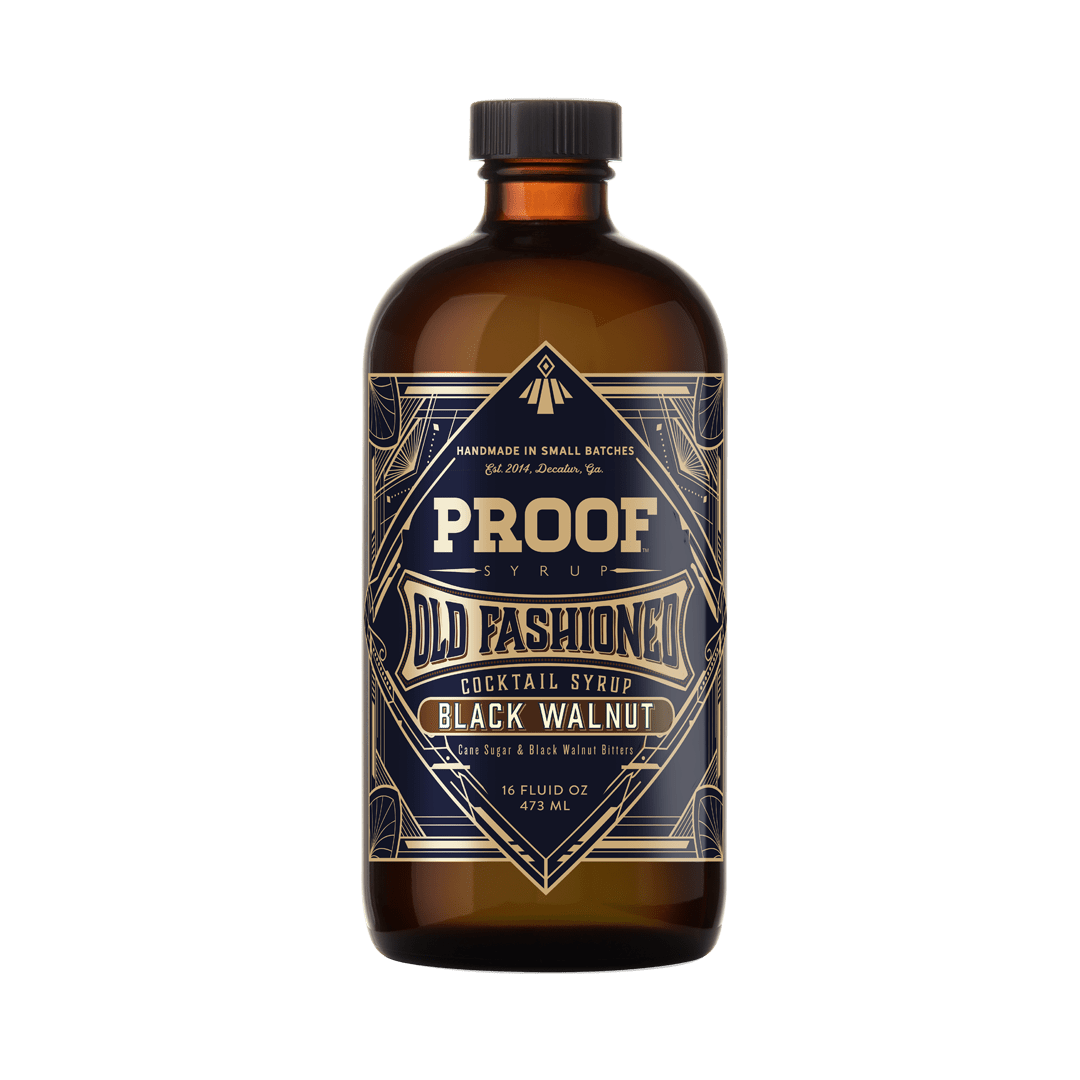
Proof Syrup is made in small batches with raw cane sugar, and the reason is not that raw sugar is virtuous. It is that the trace of molasses gives the syrup a flavor of its own, and in a three-ingredient drink a third ingredient with nothing to say is a wasted slot. The toffee note sits under bourbon's caramel and adds length. Against rye it gives the pepper something to lean on.
Body is the other half. Raw cane syrup is more viscous than a plain white simple syrup, so it coats the tongue a half second longer. That is what people are describing when they say a drink has weight, or that the finish goes on. The rest is reliability: no dissolving, no muddling, no gradient. Same pour, same drink, every time.
Variations worth building
Traditional
Ingredients: 2 oz bourbon, 1/4 oz Traditional Old Fashioned Syrup, 2 dashes aromatic bitters, orange peel.
Best for: the baseline, and the build to taste against a white-sugar simple syrup version.
Black Walnut
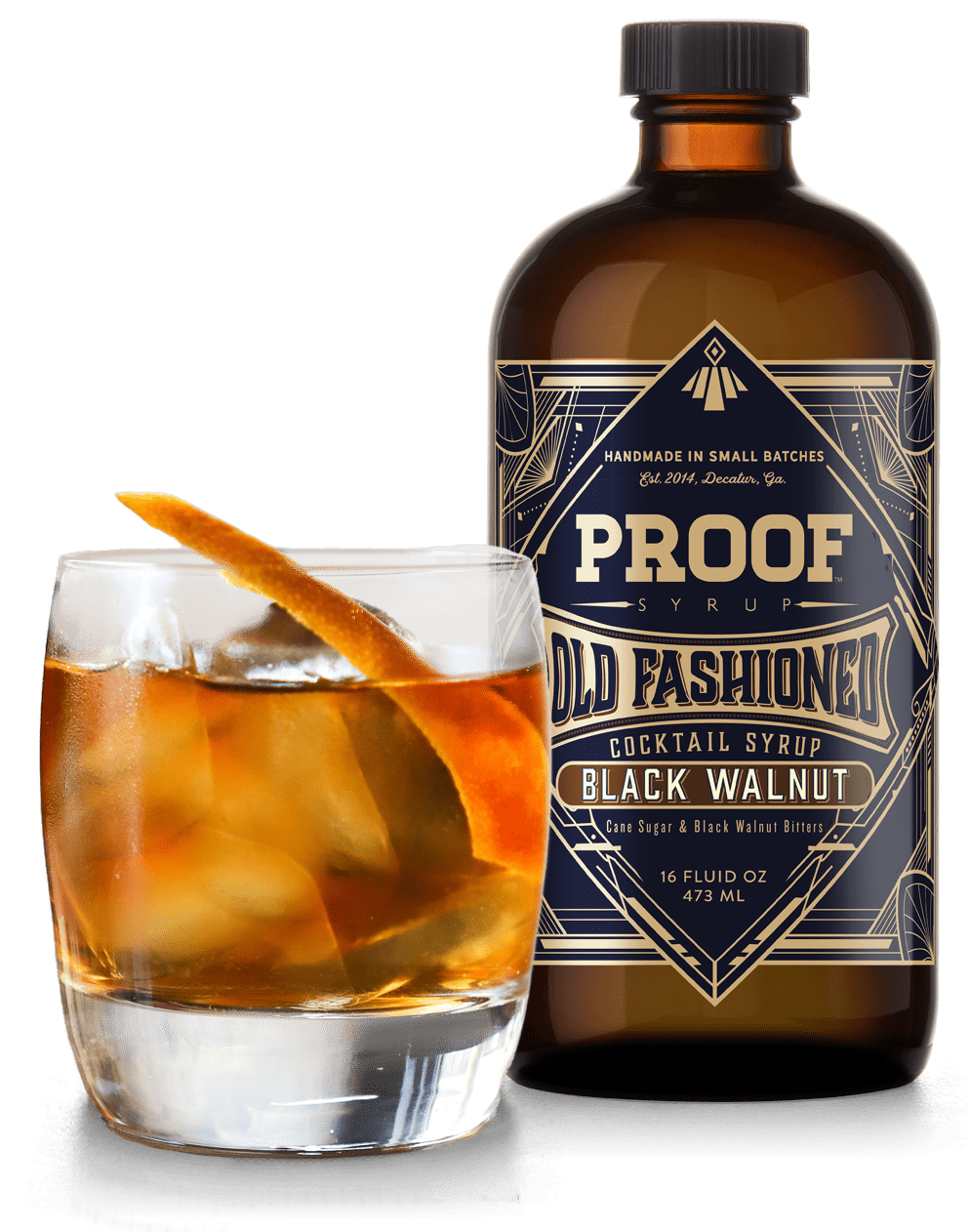
Ingredients: 2 oz rye, 1/3 oz Black Walnut Syrup, 2 dashes aromatic bitters, lemon peel.
Best for: proving the point about flavor in the sweetener slot. Toasted nut over dry rye is a drink white sugar cannot make.
Maple Bacon
Ingredients: 2 oz bourbon, 1/4 oz Maple Bacon Syrup, 2 dashes aromatic bitters, orange peel.
Best for: cold weather, and anyone who still thinks sweeteners are interchangeable.
Orange
Ingredients: 2 oz bourbon, 1/4 oz Orange Syrup, 2 dashes aromatic bitters, orange peel.
Best for: brightness without reaching for juice. Citrus in the sweetener slot lifts the drink and keeps it spirit-forward.
Technique that actually changes the drink
Add the sweetener first
Syrup goes in the empty mixing glass, then bitters, then whiskey, then ice. Building in that order means the densest ingredient gets the most contact time and the drink is integrated before you start stirring.
Measure it, do not eyeball it
A quarter ounce and a third ounce look nearly identical in a free pour and taste noticeably different in the glass. A jigger costs less than a bottle of whiskey and fixes more drinks.
Taste the syrup on its own
Put a few drops on a spoon before you build. Knowing what your sweetener tastes like by itself is the fastest way to predict what it will do to a spirit.
Taste the difference yourself
Build two identical old fashioneds, one with white-sugar simple syrup and one with raw cane. Same whiskey, same bitters, same ice. The difference will not be dramatic, and it should not be. It will be a little more color, a little more weight, a slightly longer finish, and a faint toffee note under everything. That is a small edge applied to every drink you make. Browse the full syrup lineup and pick where to start.