
A lot of home bartenders assume there are only two options for an Old Fashioned: cook down your own syrup from scratch, or settle for a bottled mix that tastes like flat soda with red dye in it. That's the wrong frame. The real question isn't homemade versus some generic bottled syrup — it's whether the hour you'd spend on a stovetop is worth it compared to a small-batch option like Traditional Proof Syrup, which is already doing the job raw cane sugar was supposed to do in the first place.
Both routes can produce a good drink. They just ask different things of you. Below is an honest look at what making your own Old Fashioned syrup actually involves, what changes when you reach for a bottle instead, and how to decide which one fits how often you actually drink.
What Makes a Great Old Fashioned Mix
An Old Fashioned only has three real components: spirit, sweetener, and bitters, plus a twist of citrus oil and a big piece of ice to slow the dilution. That short ingredient list is exactly why the sweetener matters so much. It isn't a rounding error hiding behind the bourbon — it's a third of the drink, and it does most of the work of rounding out proof and carrying the bitters through the glass.
Making your own syrup for that slot means simmering sugar and water down to a stable ratio, then deciding whether to steep in bitters, orange peel, or other aromatics while it's still hot. Get the ratio wrong and the syrup either separates or crystallizes in the fridge within a couple of weeks. Get the timing wrong on the citrus oils and you end up with something bitter instead of bright. None of this is hard, exactly, but it takes a few attempts to get repeatable, and a fresh batch of homemade syrup usually starts to lose its edge and can spoil within two to three weeks in the fridge, sugar concentration or not.
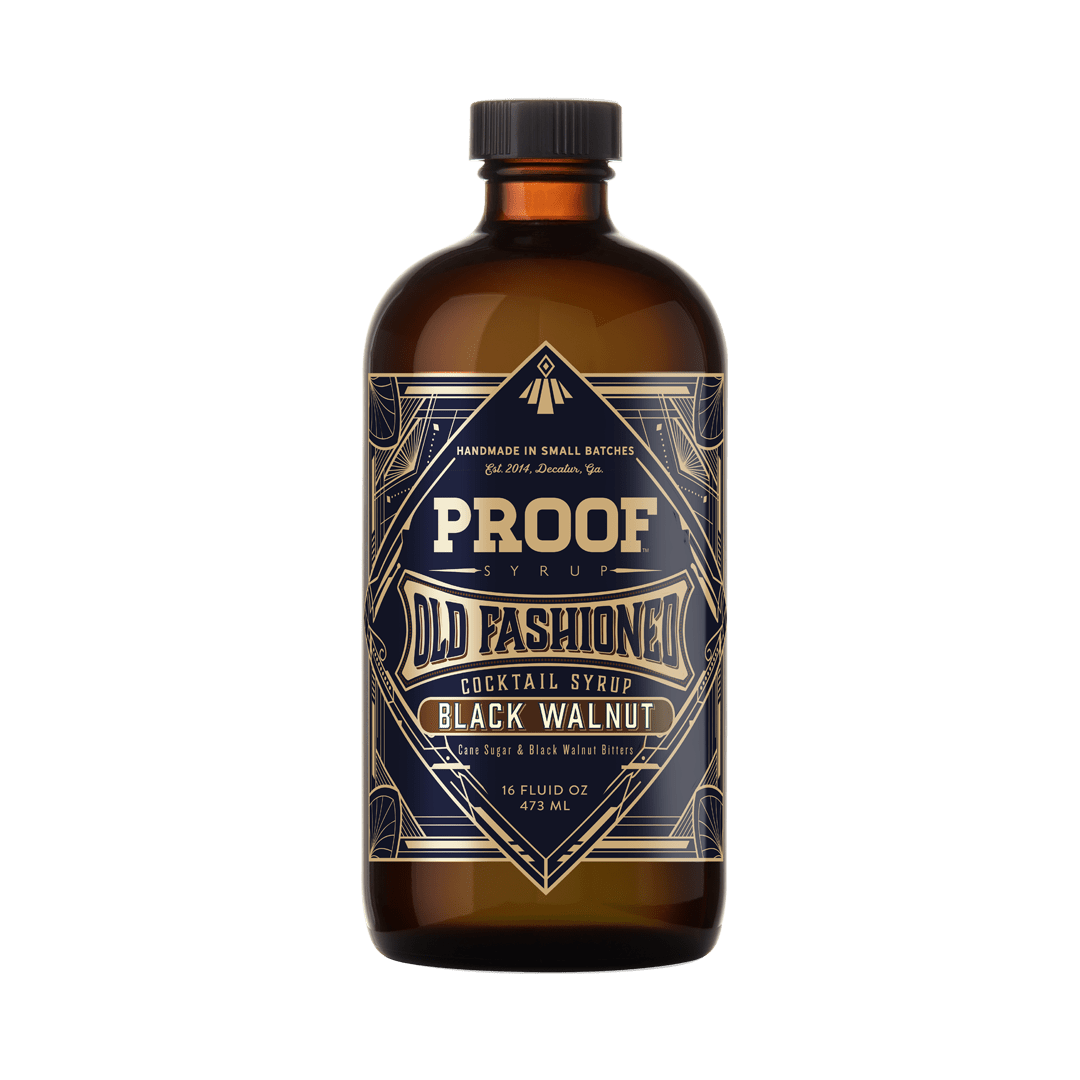
A bottled syrup built specifically for this job skips that trial and error. Proof Syrup is cooked in small batches from raw cane sugar rather than refined white sugar, which gives it real body and a rounder sweetness before a single dash of bitters goes in, and because it's made and bottled with an eye toward shelf life, it holds its flavor on the counter for months instead of weeks.
The Old Fashioned
Here's the drink itself, built the standard way so you can taste the difference for yourself no matter which sweetener you're using.
Ingredients
- 2 oz bourbon or rye
- 0.25 oz (about 1/2 tablespoon) Traditional Proof Syrup
- 2 dashes aromatic bitters
- Orange peel, for garnish
- One large ice cube
Instructions
- Add the syrup and bitters to a mixing glass.
- Add the bourbon and fill the glass with ice.
- Stir for 20 to 30 seconds, until well chilled.
- Strain over a large ice cube in a rocks glass.
- Express the orange peel over the drink, run it around the rim, and drop it in.
If you want to see exactly how that ratio was arrived at, we broke it down in how much syrup belongs in an Old Fashioned, and it applies whether you're pouring homemade or bottled.
Why the Sweetener Matters
This is where the homemade-versus-bottled question actually gets decided, because the sweetener is the one ingredient most people treat as an afterthought. A thin 1:1 simple syrup, homemade or store-bought, dilutes the drink without adding much back — you taste sugar and not much else. Raw cane sugar behaves differently. It carries a little molasses note and more viscosity, so it sits under the spirit instead of just sweetening on top of it, and it holds up better against strong bitters and citrus oil. We go deeper on the sugar side of this in raw cane sugar versus white sugar in cocktails.
Homemade cane syrup can absolutely get you there — the ingredient is available to anyone with a stove. What you're paying for with a bottle like Proof Syrup isn't the sugar itself, it's the batch consistency and the shelf life. Every bottle is hand-mixed and cooked the same way in Atlanta, so the syrup in your glass tonight tastes like the one you used last month, with no artificial preservatives doing the work of keeping it stable.
Variations
Once you've got the base ratio down, the syrup itself is where you can actually change the character of the drink without touching the spirit.
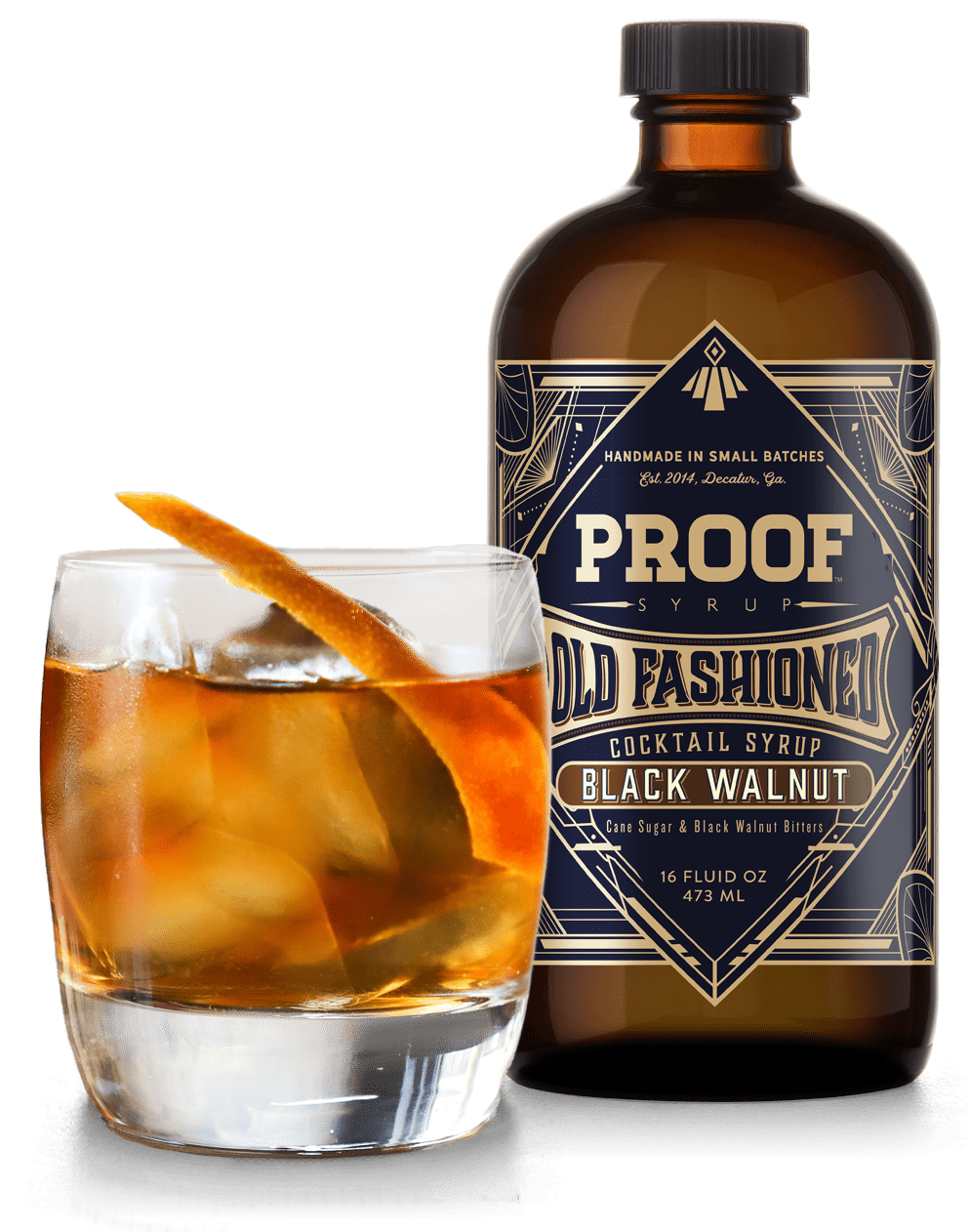
Black Walnut Old Fashioned
Ingredients: 2 oz bourbon, 0.25 oz Black Walnut Proof Syrup, 2 dashes bitters, orange peel.
Best for: drinkers who want a nuttier, slightly darker Old Fashioned that leans into the barrel notes in a bourbon.
Maple Bacon Old Fashioned
Ingredients: 2 oz rye, 0.25 oz Maple Bacon Proof Syrup, 2 dashes bitters, orange peel.
Best for: a savory, brunch-adjacent pour that plays well with rye's spice.
Orange Old Fashioned
Ingredients: 2 oz bourbon, 0.25 oz Orange Proof Syrup, 2 dashes bitters, orange peel.
Best for: anyone who wants the citrus turned up without adding fresh juice and diluting the drink.
If you'd rather taste a few side by side before committing to one bottle, the Old Fashioned syrup lineup covers the full range.
Technique Tips
Measure the syrup, don't eyeball it
A quarter ounce is small enough that "a splash" can mean anywhere from an eighth of an ounce to a half ounce depending on who's pouring. Use a jigger. This matters with a bottled syrup you're paying for by the ounce, and it matters just as much with homemade, since an inconsistent pour is the fastest way to make two batches of the same drink taste different.
Stir, don't shake
An Old Fashioned is spirit-forward with no juice or egg white to aerate, so shaking just adds unwanted air bubbles and over-dilutes it. Stir with ice for 20 to 30 seconds and strain.
Use one large cube, not a handful of small ones
Small ice has more surface area and melts faster, which waters the drink down before you're halfway through it. One large cube or sphere chills the drink just as well while melting slowly.
Taste before you add more bitters
Bitters are there to season the drink, not dominate it. Two dashes is a reasonable starting point with either a homemade or bottled syrup — taste the first sip, then adjust the next one if you want more.
So, Which One Should You Make?
If you already enjoy the process of simmering syrups and you go through an Old Fashioned a few nights a week, homemade cane syrup is a genuinely good option, and there's no reason to talk you out of a hobby you like. The math changes if you're making this drink once or twice a week: you'll use less than half a bottle before a homemade batch would start to turn, and a shelf-stable, pre-dialed-in option removes the guesswork on ratio and freshness entirely. That's the case for a small-batch bottled syrup — not that homemade is bad, but that for most people's actual drinking habits, it's more effort than the payoff justifies.
Ready to try one? Browse the full Proof Syrup lineup and pick a flavor that matches how you actually drink.