
Ask around a good cocktail bar what makes an Old Fashioned syrup great, and "demerara" comes up almost immediately. It's the sugar tiki bars reach for, the one nearly every syrup recipe online recommends, and it deserves the reputation — in the right hands, on the right night. But there's a mix-up worth clearing up before you buy anything: demerara sugar and raw cane sugar are not the same ingredient, and a homemade demerara syrup is not automatically the better base for an Old Fashioned. Proof Syrup's Traditional is built from raw cane sugar, not demerara, and once you see what each one actually is, the reason is straightforward: a three-ingredient drink needs consistency from its sweetener more than it needs an exotic flavor note.
What Demerara Sugar Actually Is
Demerara is a specific style of raw sugar, named for the Demerara region of Guyana where it was historically produced. It's sugar that has been minimally refined — the crystals are large, golden-brown, and coated in a thin layer of molasses left over from processing. That molasses is what gives demerara its signature toffee-and-caramel edge, and it's exactly why the sugar shows up so often in rum-forward tiki drinks, where a little extra sweetness and spice can stand up to funky, high-proof rum.
Demerara syrup, the kind bartenders cook at home or behind the bar, is usually just demerara sugar dissolved in hot water at a 1:1 or 2:1 ratio. It's a real, useful ingredient for the right drink. It's also entirely DIY, which is where the trouble starts for an Old Fashioned specifically.
How That's Different From the Raw Cane Sugar in Proof Syrup
"Raw cane sugar" is the broader category — sugar taken from the cane and processed as little as possible, rather than refined all the way down to bright-white table sugar. Demerara is one member of that family, not a stand-in for the whole category, and it isn't the only raw cane sugar worth cooking with. Proof Syrup is made with a different raw cane sugar, chosen for a cleaner, rounder sweetness with less of the heavy molasses note demerara carries. The result reads less like a rum-drink accessory and more like a syrup built specifically for whiskey.
If you want the fuller case for raw cane sugar over standard white sugar, we've made it in detail here: raw cane sugar vs. white sugar in cocktails. This post is narrower on purpose — it's demerara specifically, not sugar in general, measured against what Proof actually uses.
What Makes a Great Old Fashioned Syrup
An Old Fashioned is a three-ingredient drink: spirit, sweetener, bitters. Cut the ingredient count that low and every component stops being a rounding error. The sweetener isn't there to make the drink taste sweet — it's there to round off the alcohol's heat, carry the bitters, and give the whole thing body on the way down. A syrup with no texture, like plain simple syrup, disappears into the glass. A syrup that comes out different every time you cook it throws off the ratio you've already worked out. What you actually want is a syrup with real body that behaves the same way every single time you reach for the bottle.
Classic Old Fashioned, Built on Raw Cane
Ingredients
- 2 oz bourbon or rye
- 0.25 oz Proof Syrup Traditional
- 2 dashes Angostura bitters
- 1 large ice cube
- Orange peel, for garnish
Instructions
- Add the bourbon, syrup, and bitters to a mixing glass with ice.
- Stir for about 20 seconds, until well chilled.
- Strain over one large cube in a rocks glass.
- Express an orange peel over the top and drop it in.
For the exact ratio and how to adjust it to taste, see how much syrup goes in an Old Fashioned.
Why the Sweetener Matters
Here's what a homemade demerara syrup can't promise you: consistency. Cook it yourself and the result depends on your water, your heat, how long you let it simmer, and how coarse that particular bag of sugar happened to be. One batch comes out thin, the next comes out cloudy, and either way it's sitting in the fridge with a shelf life measured in a couple of weeks before it starts to ferment or separate.
Proof Syrup is made in small batches from raw cane sugar, hand-mixed and cooked in Atlanta, with no artificial preservatives — but it's made the same controlled way every single batch. The bottle you buy in September pours the same as the one you bought in March. It has real body, not the watery consistency of a rushed simple syrup, so it holds its own next to a two-ounce pour of spirit instead of getting lost in it. That's the actual argument for buying a syrup instead of cooking one at home: you're not trading away quality, you're trading away variance.
Variations
Raw cane sugar is the base. From there, Proof's other flavors let you build variations on the same Old Fashioned without touching the ratio you've already worked out.
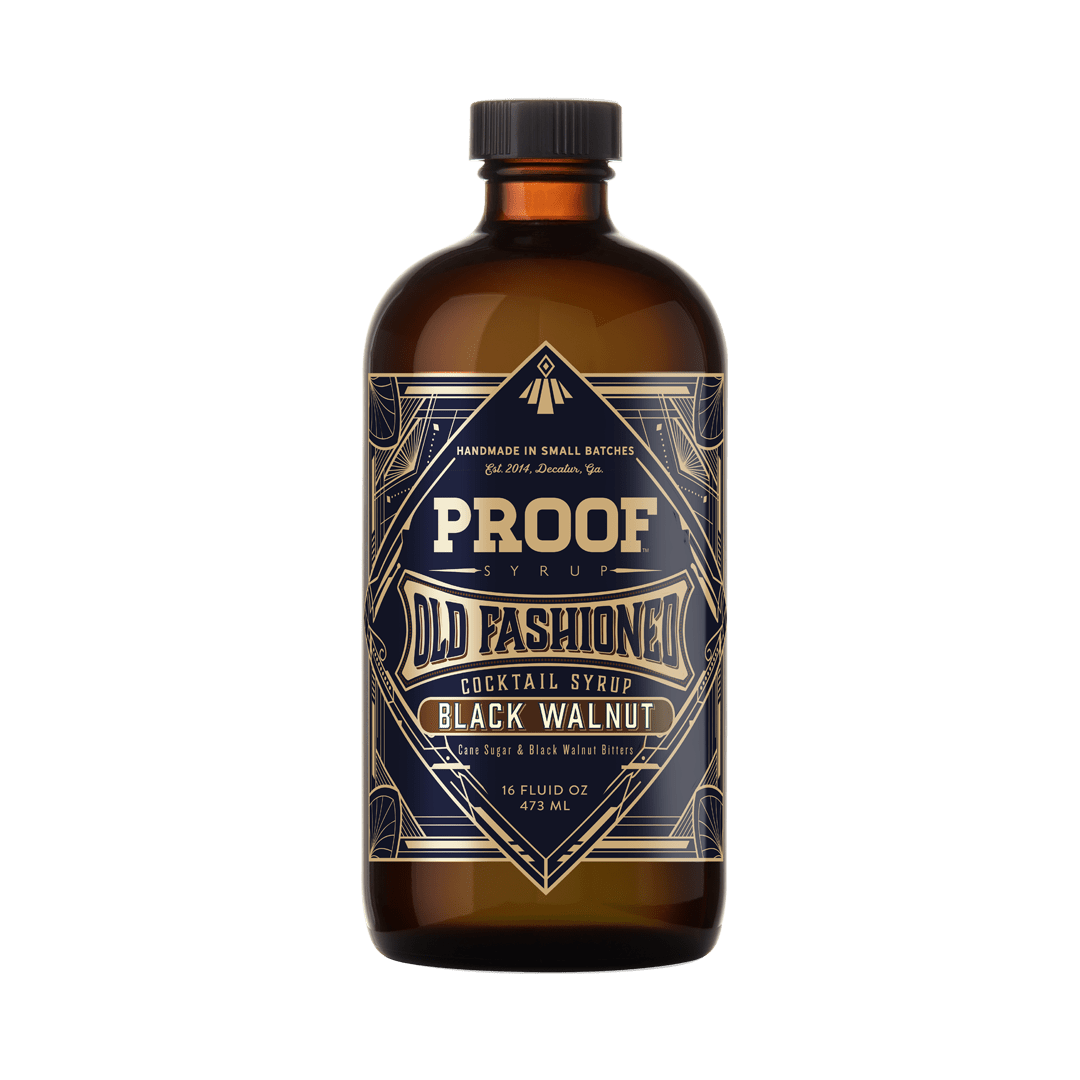
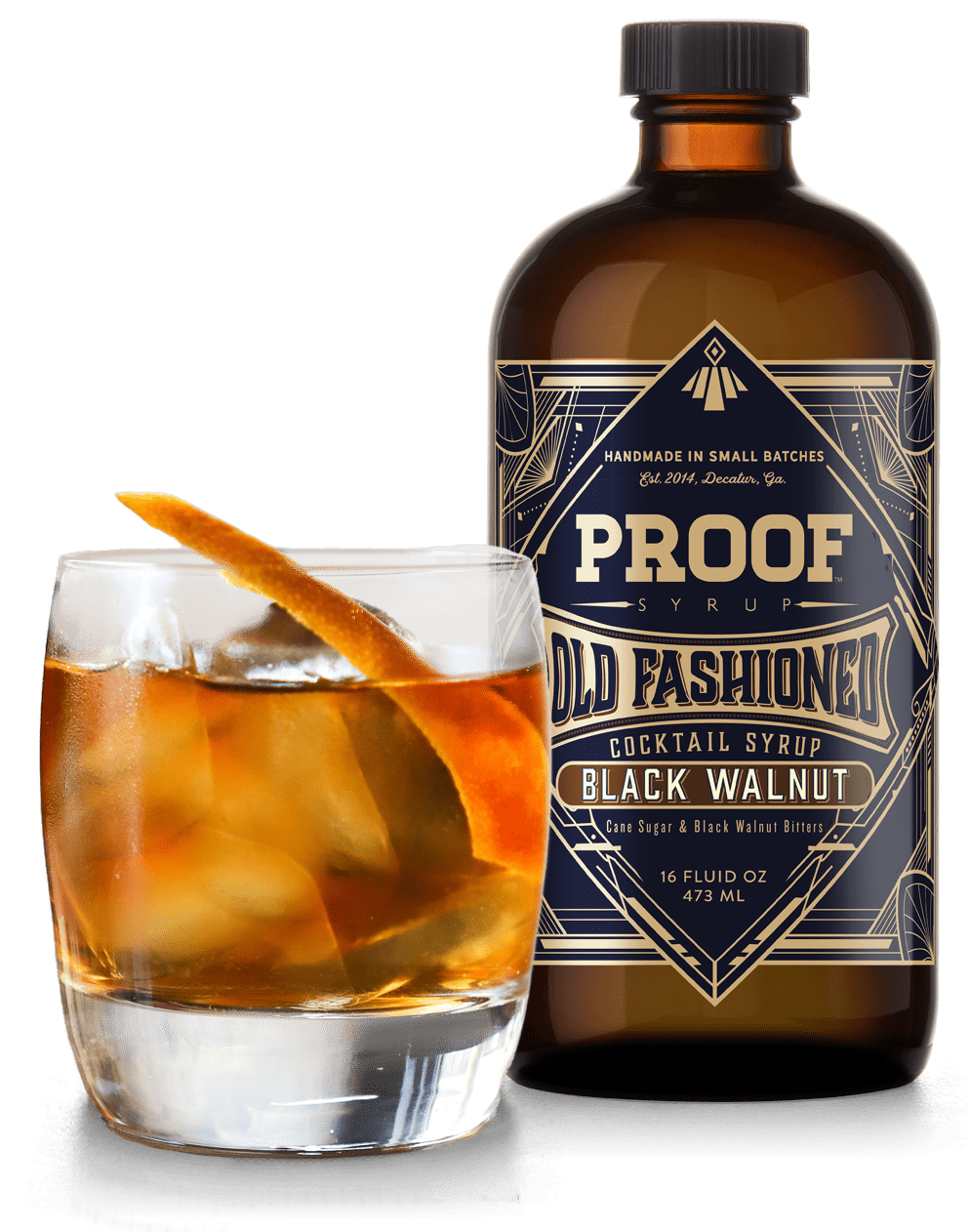
Black Walnut Old Fashioned
Ingredients: 2 oz rye, 0.25 oz Proof Syrup Black Walnut, 2 dashes Angostura bitters
Best for: cooler weather, and rye drinkers who want a nuttier, richer finish without switching spirits.
Maple Bacon Old Fashioned
Ingredients: 2 oz bourbon, 0.25 oz Proof Syrup Maple Bacon, 2 dashes orange bitters
Best for: brunch service or anyone who wants a savory-sweet edge — this one tends to get requested twice in a row.
Orange Old Fashioned
Ingredients: 2 oz bourbon, 0.25 oz Proof Syrup Orange, 2 dashes Angostura bitters, orange peel
Best for: lighter, brighter pours in warmer months, or anyone who finds a straight Old Fashioned a little heavy.
Technique Tips
Stir, Don't Shake
An Old Fashioned is spirit-forward and all-liquor; shaking it just bruises it and adds unwanted dilution and air. Stir until the outside of the mixing glass is cold to the touch.
Match the Ice to the Drink
A single large cube melts slower than a handful of small ones, which means less dilution over the time it actually takes to drink it. If you only own standard cubes, use fewer of them.
Taste Before You Adjust
If a syrup with real body seems "too strong" at first, you're probably over-pouring out of habit. Start at a quarter ounce, taste, and adjust in small increments rather than doubling the pour on the next round.
Don't Skip the Peel
Expressing citrus oil over the top of the glass changes the aroma of every sip that follows. It's a five-second step that makes a bigger difference than most people expect.
Try the Rest of the Lineup
Traditional is the reference point, but the rest of the Old Fashioned syrups are worth working through if you want to see how far one good sweetener can stretch a single recipe. Browse the full line at Proof Syrup's Old Fashioned syrups.