
The assumption is easy to make: cocktail syrup is cocktail syrup, it's flavored sugar water, and paying more for a "craft" version is mostly marketing. That assumption falls apart the moment you taste two old fashioneds side by side — one built on a mass-market cocktail mix, one on something like Proof Traditional — because the difference isn't subtle. It's body, it's how the sweetness holds up as the ice melts, and it's whether the drink tastes like it was made with real ingredients or something engineered to survive a warehouse shelf for two years.
Both approaches have a real reason to exist. Big commercial syrup and cocktail-mix brands are solving for shelf stability, consistency at massive volume, and a price point that works in a grocery aisle. That's not a knock — it's just a different set of priorities than a syrup made to taste like the fruit or flavor it's named after.
What Makes a Great Cocktail Syrup
Start with what a syrup is actually doing in the glass. In a simple, spirit-forward drink like an old fashioned, the syrup isn't a minor add-in — it's one of three ingredients, roughly a third of what you're drinking. That means the quality gap between syrups shows up directly in the final drink, not buried under six other ingredients the way it might in a complicated tiki cocktail.
Mass-produced syrups are usually built to be shelf-stable at room temperature for a long time, which means preservatives and stabilizers, and often flavor concentrates rather than the actual ingredient. That's a reasonable engineering tradeoff if the goal is a syrup that survives a truck route and a year on a shelf. But stabilizers and concentrates tend to thin a syrup out — you get sweetness and a flavor note, but not much texture, and the flavor can taste more like an idea of the ingredient than the ingredient itself.
Small-batch production solves for a different goal: flavor and body, at the cost of shelf life. Proof syrups are cooked in small batches in Atlanta from raw cane sugar, using real ingredients instead of flavor concentrates, with no artificial preservatives. The syrup is thicker as a direct result — raw cane sugar retains more of its natural molasses content than refined white sugar, and without stabilizers thinning things out, the syrup keeps more of its actual body. You taste that the moment you stir a drink: the sweetness doesn't just hit and fade, it stays present through the whole glass.
Traditional Old Fashioned Recipe
Ingredients
- 2 oz bourbon or rye
- 3/4 oz Proof Traditional Syrup
- 2 dashes Angostura bitters
- Orange or lemon peel, for garnish
- Large ice cube
Instructions
- Combine the bourbon, Traditional syrup, and bitters in a mixing glass with ice.
- Stir for 20-30 seconds until well-chilled.
- Strain into a rocks glass over a single large ice cube.
- Express the citrus peel over the drink, then drop it in.
- Taste before you add anything else — a well-made syrup rarely needs adjusting.
Why the Sweetener Matters
This is really the whole argument in miniature: the sweetener is not a rounding error in a three-ingredient drink. Raw cane sugar, cooked in small batches rather than blended at industrial scale, gives Proof syrups a finish that holds up through dilution — the last sip tastes as balanced as the first. That's a direct result of using real ingredients (actual walnuts, actual maple and smoked flavor, actual citrus oil, depending on the variety) instead of flavor concentrates standing in for them. We've laid out the raw cane vs. white sugar case in more detail here if you want the fuller technical breakdown.
The tradeoff is shelf life. Small-batch, preservative-free syrup doesn't sit at room temperature indefinitely the way a stabilized commercial mix does — refrigerate after opening and expect to use it within a reasonable window, not a year. That's the honest cost of trading shelf stability for flavor and body.
Variations
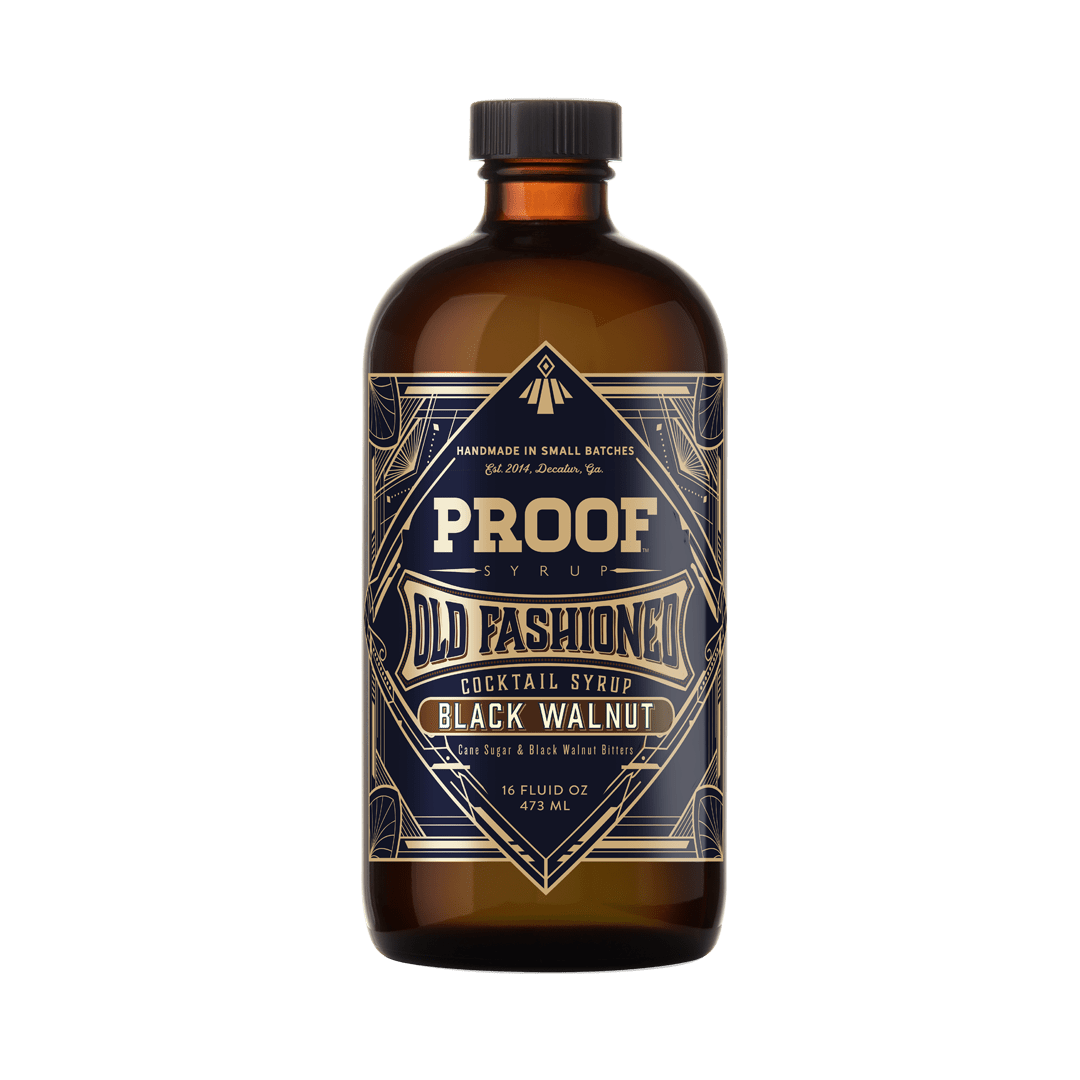
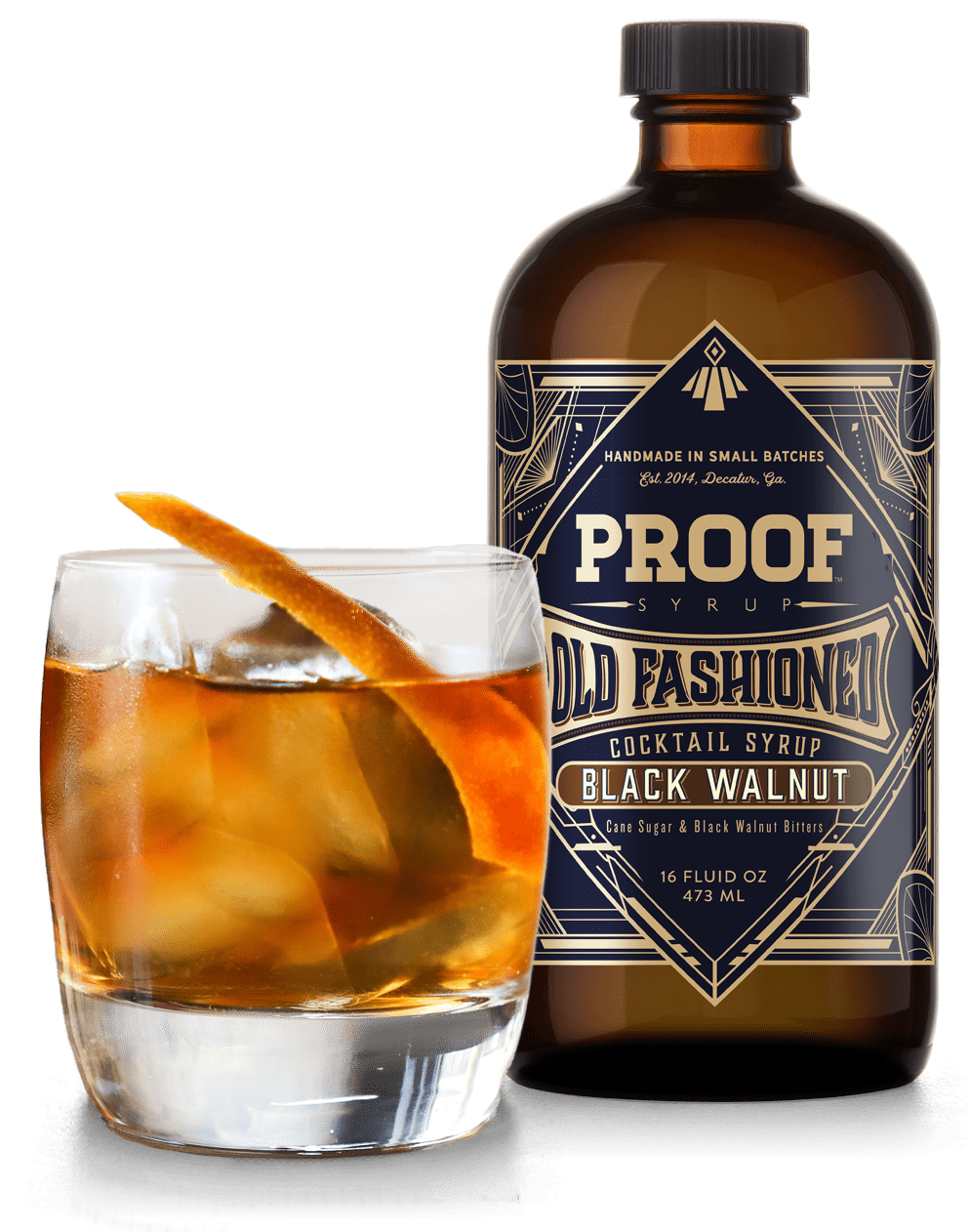
Black Walnut
Ingredients: 2 oz rye, 3/4 oz Proof Black Walnut Syrup, 2 dashes aromatic bitters, orange peel.
Best for: Drinkers who want to feel the body difference most clearly — Black Walnut's richness makes thin, concentrate-based syrups taste especially flat by comparison.
Maple Bacon
Ingredients: 2 oz bourbon, 3/4 oz Proof Maple Bacon Syrup, 2 dashes aromatic bitters, orange peel or bacon garnish.
Best for: A flavor profile that's nearly impossible to fake with a concentrate — the smoked, savory notes need real cooking, not a flavoring agent.
Orange
Ingredients: 2 oz bourbon, 3/4 oz Proof Orange Syrup, 2 dashes orange bitters, orange peel.
Best for: A lighter side-by-side test — citrus is one of the easiest flavors to taste as real fruit versus flavoring once you're paying attention.
How to Taste the Difference Yourself
Do a Side-By-Side, Not a Single Pour
Body and thinness are hard to notice in isolation. Make two identical old fashioneds — one with a mass-market mix, one with a small-batch syrup — and taste them back to back. The gap is much more obvious in comparison than in a single drink on its own.
Pay Attention to the Last Sip, Not the First
Thin syrups tend to taste fine on the first sip and fall apart by the last one, once the ice has melted and diluted the drink. A syrup with real body holds its balance longer.
Check the Ingredient List
If "natural flavor" or a stabilizer is higher on the list than the named ingredient, that's usually your answer about which category a syrup falls into.
Store It Like Food, Not a Pantry Staple
Once a small-batch syrup is open, treat it like you would fresh juice — refrigerated, used within a reasonable window. That's the tradeoff for skipping the preservatives.
Taste the Difference for Yourself
The easiest way to settle this for your own bar is to try one bottle against whatever you're currently using. Shop the full Proof Syrup lineup and see which flavor fits how you actually drink.