
The usual mistake is treating smoke like a garnish. Somebody buys a torch kit, scorches a plank of cherry wood for four seconds, claps a glass over it, and then wonders why the drink tastes like a campfire that got rained on. Smoke is an ingredient. It needs contact time, and it needs something in the glass to hold onto, which is where a real sweetener like Traditional Proof Syrup does the quiet work. Get both right and you end up with a smoked old fashioned that finishes long and warm instead of ashy.
The other piece of good news is that the hardware is optional. A torch and a smoking box are fun, but they are not the reason a smoked old fashioned tastes good. A single wood chip, a cheap lighter, and a coupe glass will get you ninety percent of the way there, and the ten percent you lose is mostly theater.
What makes a great smoked old fashioned
An old fashioned has three moving parts: whiskey, bitters, sweetener. That means the sweetener is roughly a third of the cocktail by function, even though it is a quarter ounce by volume. It is not there to make the drink sweet. It is there to carry body, to round the edges off the alcohol, and to give the finish something to sit on after the whiskey burns off. Smoke sits on that same platform. Without body, smoke has nowhere to land.
This is where standard 1:1 simple syrup falls short. Equal parts sugar and water is, by weight, half water. You are adding dilution and calling it sweetener. In a stirred, spirit-forward drink that already gets water from ice, the result is a cocktail that opens well and then thins out at the finish, going flat and slightly hot right when it should be at its best. Add smoke to a thin drink and you get bitterness on the back end.
Smoked old fashioned recipe
This is the low-equipment version. Total working time is about three minutes, most of it waiting for smoke to do its job.
Ingredients
- 2 oz bourbon or rye, 100 proof if you have it
- 0.25 oz Traditional Proof Syrup
- 2 dashes aromatic bitters
- 1 large clear ice cube
- 1 orange peel, plus one wood chip or a small piece of untreated oak or cherry
Instructions
- Set your empty rocks glass upside down on a heatproof surface. Light the wood chip on a small plate until it catches and holds an ember, then blow out any flame so it smolders.
- Trap the smoke under the inverted glass and leave it alone for sixty to ninety seconds. Longer than you think. The glass should look genuinely cloudy, not faintly hazy.
- While it sits, combine the whiskey, syrup, and bitters in a mixing glass with plenty of ice.
- Stir for about twenty seconds, until the outside of the mixing glass frosts and the mixture pulls together.
- Turn the rocks glass over, drop in the large cube, and strain the drink over it. The smoke clings to the glass walls and the ice, not the air.
- Express the orange peel over the surface, rub it along the rim, and drop it in. Taste before you adjust anything.
Why the sweetener matters
Proof Syrup is made in small batches from raw cane sugar, not refined white sugar cut with water. Raw cane brings its own molasses character, which is exactly the register a smoked drink wants: a little caramel, a little depth, nothing candied. It is also cooked to a heavier consistency than a home 1:1, so a quarter ounce actually contributes texture rather than just sweetness.
The practical difference shows up in the finish. A drink built with a thin syrup drops off fast. A drink built with something that has weight to it stays present for another few seconds, and that is the window where smoke and oak read as pleasant instead of acrid. Small-batch production also means a bottle you open in March behaves the same as the one you opened in October, so once you find your ratio you can stop re-tasting every build.
Variations worth making
Black Walnut Smoked Old Fashioned
The most natural pairing on this list. Walnut and wood smoke are close cousins, and the syrup makes the drink read almost like a barrel sample.
Ingredients
- 2 oz rye
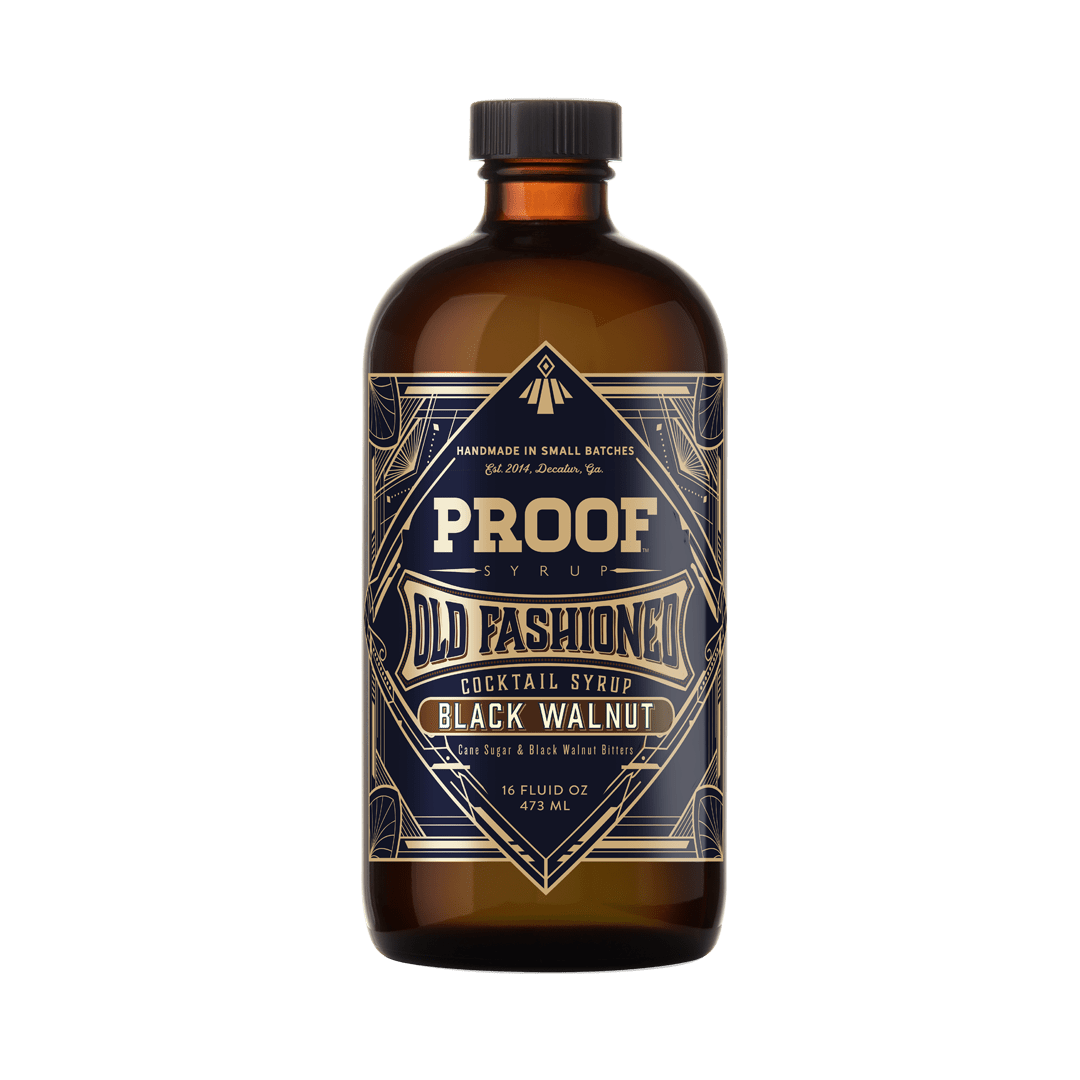
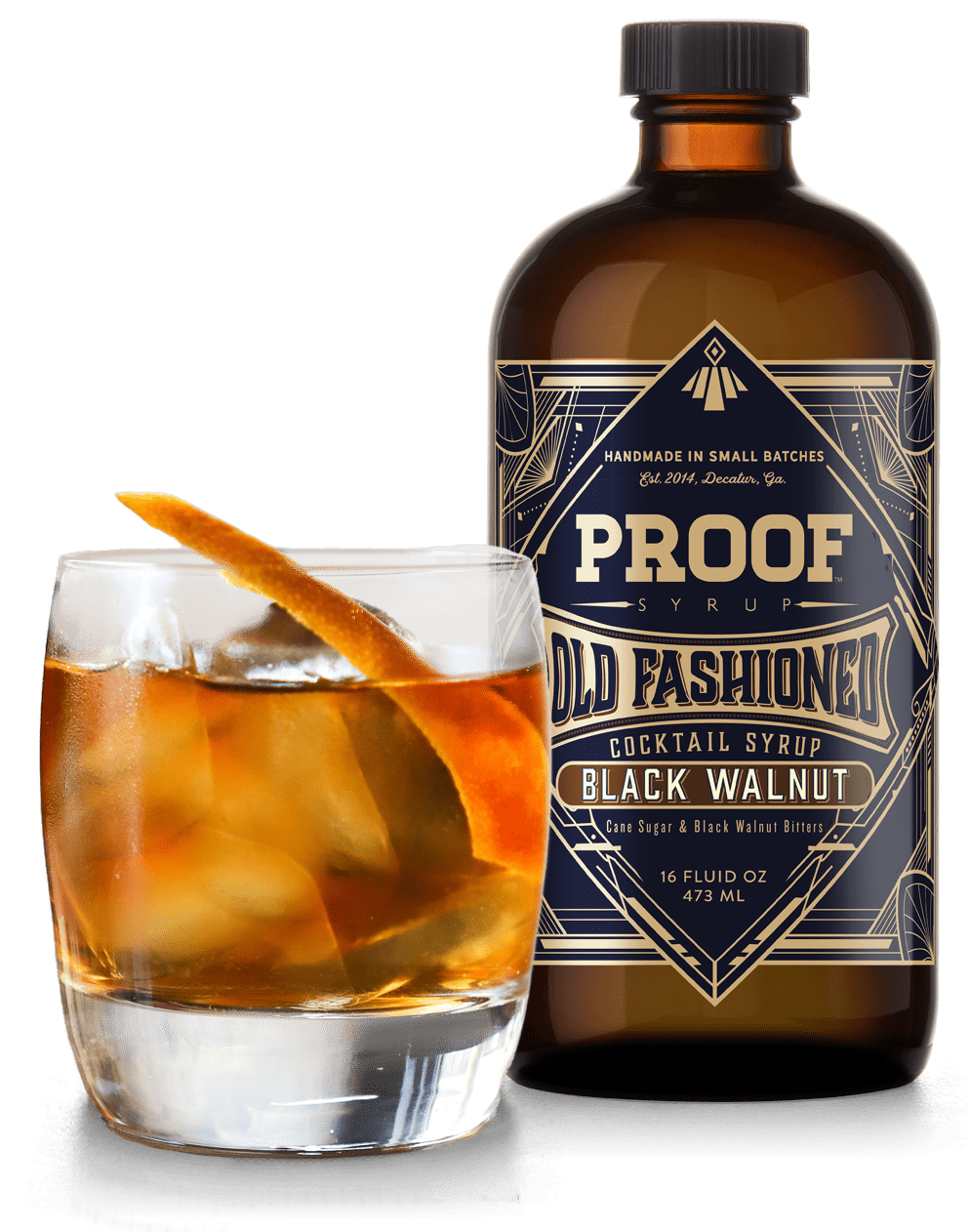
- 0.25 oz Black Walnut Proof Syrup
- 2 dashes aromatic bitters
- Orange peel
Best for: cold weather, high-rye whiskey, and anyone who thinks their old fashioned tastes too polite.
Maple Bacon Smoked Old Fashioned
Savory and unapologetic. The smoke in the glass and the smoke in the syrup stack, so pull back to a slightly shorter smoke time or the drink gets one-note.
Ingredients
- 2 oz bourbon
- 0.25 oz Maple Bacon Proof Syrup
- 2 dashes aromatic bitters
- Orange peel, or skip the peel entirely
Best for: brunch, grilled food, and the one guest who always asks for something weird.
Bright Smoked Old Fashioned
Citrus lifts smoke rather than competing with it. Keep the syrup clean and let a generous orange peel do the aromatic work. This is the brightest version here and the easiest to drink two of.
Ingredients
- 2 oz bourbon
- 0.25 oz Traditional Proof Syrup
- 2 dashes aromatic bitters
- Two wide orange peels, one expressed over the glass and one left in
Best for: warm evenings, lighter bourbons, and porch drinking.
Technique that actually changes the drink
Smoke the glass, not the liquid
Smoking the finished cocktail directly puts particulate in the whiskey, and it turns harsh within a minute or two. Smoking the empty glass gives you aroma and a light coating that dissolves gradually as you drink. It also means the last sip still tastes smoky, which is the whole point.
Use one wood, not a blend
Oak, cherry, hickory, and pecan wood all work. Mixing them muddies everything. Pick one, learn what it does at sixty seconds versus ninety, and stay there. Untreated chips from a hardware store barbecue aisle cost a few dollars and last a year.
Stir longer than feels necessary
Twenty seconds with good ice is the floor. Most home bartenders stop at ten and serve a drink that is under-diluted and closed off. You want the whiskey and syrup to actually integrate, and you can feel it happen through the mixing glass when the texture turns from watery to slightly viscous.
Build the ratio around your whiskey
A quarter ounce of syrup is the starting point for a 100-proof spirit. Drop to an eighth of an ounce for something at 80 proof, and go up toward a third of an ounce for barrel proof. Adjust the sweetener, not the bitters, when a drink tastes off balance.
Start with one bottle
The fastest way to improve a smoked old fashioned is to stop making syrup on the stove and start using something built for the job. Traditional is the right first bottle. Black Walnut is the right second one. Browse the full lineup at proofsyrup.com and pick the two that sound like the drink you already want to be making.
What each wood actually does
Picking one wood is the rule, but picking the right one is where the drink gets interesting. Untreated chips from the barbecue aisle cover all of these for a few dollars.
- Cherry: sweet, mild, faintly fruity. Pairs with lighter bourbons and adds sweetness without competing. The easiest one to hand somebody who has never had a smoked drink.
- Apple: similar to cherry but earthier. Soft enough that the whiskey stays front and center.
- Oak: the default for whiskey. It echoes the barrel character already in the bourbon and leaves a dry, woody finish. Familiar and hard to get wrong.
- Hickory: assertive and savory. Cut your smoke time short with this one. It holds up to high-proof bourbon and to Black Walnut.
- Pecan: nutty, warm, slightly sweet. One of the best all-around matches for an old fashioned and the obvious partner for Maple Bacon or Traditional.
- Walnut: rich, bitter, deeply earthy. Paired with Black Walnut syrup the smoke and the sweetener speak the same language.
Start with cherry or oak. Move to walnut or hickory once you know what sixty seconds tastes like versus ninety.